
We DIG Willow House and School Green (2022 - 2025)
We DIG York explored Willow House and School Green as part of a long-running archaeological training project led by York Archaeology in partnership with local organisations and communities.
Across multiple seasons, participants uncovered a complex and ever-changing landscape shaped by work, conflict, faith, and daily life. Each year built on the last—revealing new discoveries, raising new questions, and offering hands-on experience in real archaeological investigation.
After two successful years at Willow House, near Walmgate Bar (York’s best-preserved medieval gateway) our focus shifted to School Green. Following consultation with local residents, we investigated this unassuming patch of grass, which revealed remarkable potential. A parchmark (an area of dry or discoloured grass that shows the outlines of buried structures) hinted at hidden foundations. We believed it was once home to the Hope Street British School and historic maps indicated that possibly the lost medieval church of St Peter-in-the-Willows could have been buried there.
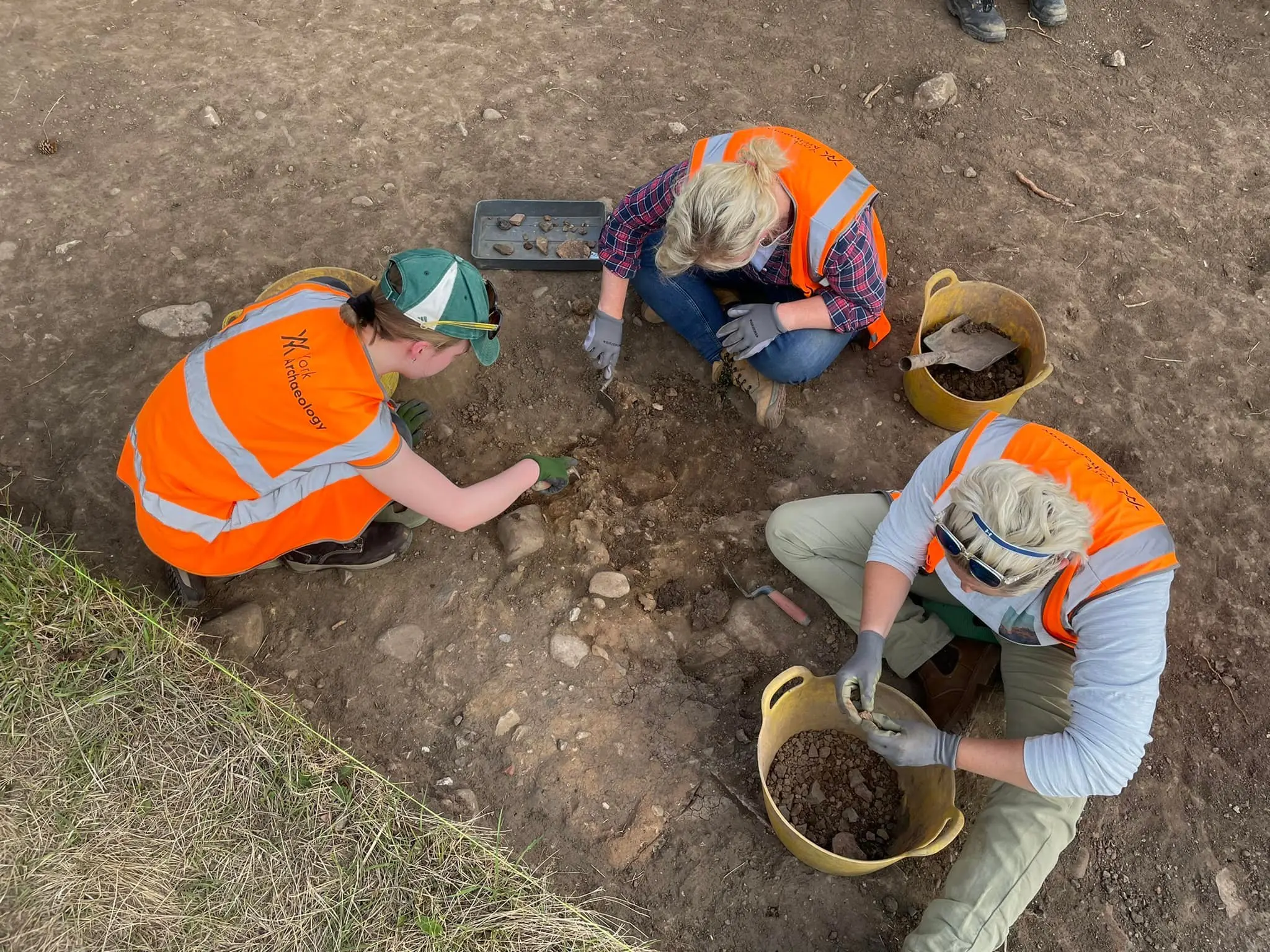
Participants worked alongside professional archaeologists to:
- Excavate real archaeological features
- Identify and record layers and structures
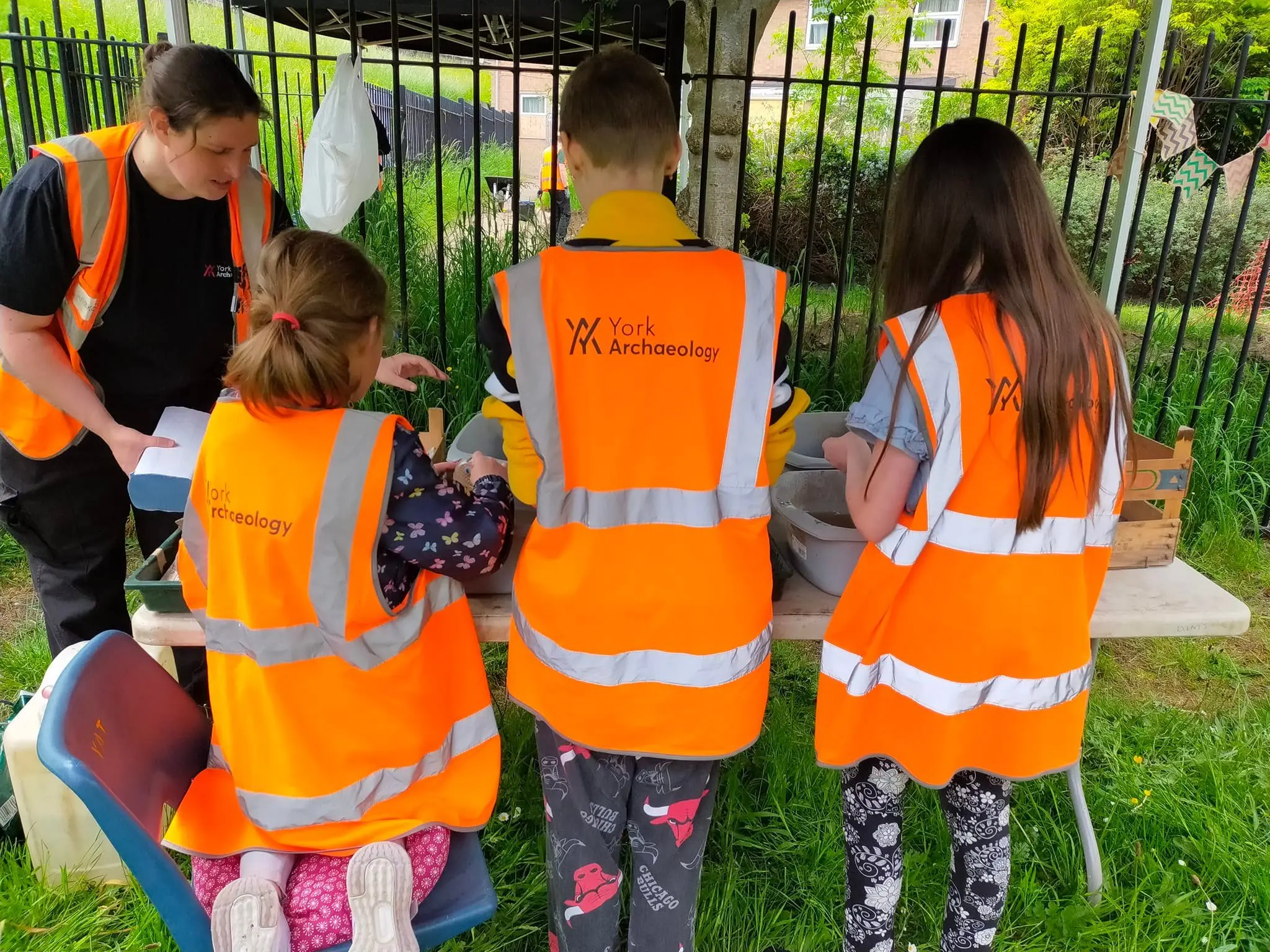
- Handle and interpret finds
- Contribute to ongoing research into York’s past.
Lives within the walls
Exploring 2,000 years of work, war, and worship on Walmgate
Industrial Revolution
Excavations uncovered evidence of densely packed terraced housing, drainage systems, and cellars—revealing the realities of 19th-century urban life. At School Green, we exposed parts of the Hope Street British School (1827–1890), offering a glimpse into Victorian education and childhood.
Participants helped uncover these structures, piece by piece, learning how buildings were constructed, used, and eventually abandoned.



English Civil War
During the 1644 Siege of York, Walmgate endured months of cannon fire. Excavations revealed musket balls and disturbed layers that may relate to this period of conflict—tangible evidence of life under siege.
A Medieval Mystery
The church of St Peter-in-the-Willows stood here until its demolition in 1549, but its exact location remains uncertain. Earlier excavations revealed possible wall footings—but no definitive plan.
Participants worked to uncover structural remains, track boundary features, and piece together the layout of the church, its yard, and the surrounding medieval landscape.
Viking Age York
Many modern property boundaries along Walmgate date back to the 10th century. Excavation revealed strong evidence of Anglo-Scandinavian activity, when this area was a thriving centre of trade and industry.
By carefully excavating deep archaeological layers, participants explored how this Viking-age landscape was organised and used.
Roman York (Eboracum)
Although Walmgate was likely first laid out during the Roman period, evidence is often fragmentary. Finds from earlier seasons (including high-status pottery) hinted at nearby activity.
In 2025, a test pit revealed Roman remains just 0.6m below the surface. Was this the first clear glimpse of Eboracum in this part of the city?
Early Origins
While York is best known for its Roman past, prehistoric artefacts have also been discovered in the area, including Bronze Age finds. Whether intact remains survive is still unknown, making this one of the most exciting questions for future excavation.